The Pull of the Beam: Magnetic Luminaire Fixings on Exposed Steel, Assessed
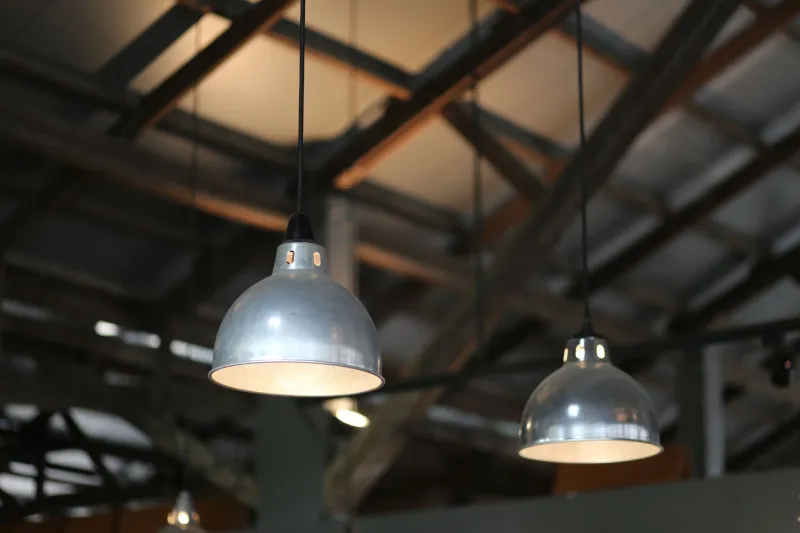
Photo: magnetic track luminaire mounted on exposed steel beam interior, via t4.ftcdn.net
Exposed structural steel has become a familiar part of the contemporary British interior, from loft conversions and refurbished warehouses to commercial fit-outs that leave the frame on show. In these settings, the magnet-mounted luminaire is an appealing proposition: no drilling, no visible brackets, and a clean line where light meets beam. The appeal is understandable. The risk is that magnetism is treated as a fixing method in its own right, rather than as a connection that depends on substrate, coating, load and context.
The substrate is part of the specification
A magnetic fixing is only as reliable as the steel beneath it. Ferritic mild steel will attract a magnet; austenitic stainless steel, aluminium and many proprietary cladding materials will not. Even when the beam is magnetic, the surface condition matters. Powder coatings, wet paint, galvanising, mill scale, weld spatter and intumescent coatings all sit between the magnet and the steel. Some are thin enough to allow a secure hold; others are not. Thick powder coats and fire-protective coatings can reduce magnetic flux to the point where the manufacturer’s published load figure no longer applies.
The shape of the beam is equally important. A flat flange offers predictable contact; a curved web, a weld seam or a line of bolts does not. Site testing with a simple magnet is useful as a first check, but it is not a substitute for confirming the steel grade and coating specification. For UK trade buyers, the sensible starting point is a written statement from the luminaire manufacturer confirming the substrate and finish conditions under which the fixing has been tested.
Genuine applications, not shortcuts
Magnet-mounted luminaires have legitimate uses. They can suit lightweight linear fittings beneath an accessible beam flange in a commercial fit-out where the fixture is inspected and maintained from a podium or access platform. They can work well for display and temporary installations, or in residential interiors where a small, low-mass fitting is being added to an exposed beam and the manufacturer’s system includes a secondary retention device.
They are less convincing as a shortcut. A heavy pendant over a circulation route, a high-level fitting in a public atrium, a luminaire above a plant room or any installation where the only reason for choosing magnets is to avoid drilling should be treated with caution. If the fixing cannot be inspected, if the cable is likely to be pulled during maintenance, or if the steel is coated with a material whose fire performance must not be compromised, a magnetic mount is probably the wrong detail.
Load limits require interpretation
Manufacturer data for magnetic fixings typically distinguishes between pull-off force and shear force. Both matter, but neither should be read as a working load without adjustment. The luminaire’s weight is only part of the load; drivers, diffusers, cables and any maintenance force also act on the connection. Temperature, vibration, surface finish and the number of magnets in contact all influence performance. Multiple magnets do not simply multiply capacity if contact is uneven.
A project-specific safety factor is essential, and it should be agreed with the specifier rather than assumed. The fixing should also be assessed for the direction of load. A magnet that holds well in shear may perform very differently when pulled directly away from the steel. Where there is any doubt, a secondary tether or independent mechanical retainer should be specified.
Cable strain relief is not optional
The luminaire may be held by magnets, but the cable should never be asked to perform the same duty. Cables should be independently supported, glanded or clamped so that movement of the fitting cannot transmit strain to the terminals. A service loop is useful, but it is not a substitute for proper strain relief. Earthing continuity and enclosure integrity must be maintained in accordance with BS 7671 and the luminaire manufacturer’s instructions. In commercial work, the maintenance regime should include a visual check of both the magnet contact surfaces and the cable support.
Vibration and movement
Steel frames move. They expand, contract, transmit footfall and, in some buildings, carry plant vibration. A magnetic fixing that performs well in a quiet domestic interior may creep or slide in a plant room, near a heavy door, or on a mezzanine subject to regular traffic. Where vibration is present, a mechanical retainer is preferable. If magnets are retained, the specification should include periodic inspection and a clear method for checking that the fitting has not shifted.
Fire-rated assemblies and protected steel
Fire performance is a common point of confusion. A magnetic fixing is not a tested substitute for a fixing in a fire-rated ceiling, wall or structural assembly. Nor should a magnet be used in a way that damages intumescent coatings or compromises a fire-protection system. Penetrating protected steel requires assessment; clamping may be equally sensitive. In all cases, the fire strategy and Building Regulations Part B requirements should be considered before the fixing is chosen. A structural or fire engineer’s advice is appropriate where the beam forms part of a protected assembly.
Finishes, contact and appearance
Powder-coated beams are common in design-led interiors, and the coating thickness can be decisive. A thin decorative coat may allow a secure magnetic hold; a thick architectural powder coat may not. Rubber or polymer pads on the magnet can improve grip and protect the finish, but they can also leave marks or trap grit. On visible steel, the contact point should be detailed as carefully as the luminaire itself. Avoid scraping or abrading a coating to improve adhesion unless the finish specification explicitly allows it.
When a mechanical clamp is the safer specification
Mechanical clamps, beam brackets and straps remain the safer choice for heavier fittings, public overhead locations, vibration-prone installations, fire-rated assemblies, thick or uncertain coatings, and any situation where the steel grade cannot be confirmed. A clamp also provides a more inspectable connection. The fact that a clamp may require a tool or a fixing does not make it less elegant; it makes the engineering visible.
A short specification checklist
- Confirm the steel type and coating, and check that the magnet manufacturer’s data applies.
- Obtain tested load figures for pull-off and shear, then apply a project safety factor.
- Include the weight of drivers, accessories and maintenance loads.
- Design independent cable strain relief and earthing continuity.
- Specify secondary retention where failure would create a hazard.
- Assess vibration, fire performance and access for inspection.
- Use a mechanical clamp where the substrate or duty is uncertain.
Magnetism can be a useful detail on exposed steel, but it should never be an invisible assumption. Specified with the same discipline as any other fixing, a magnetic luminaire can preserve the clarity of the frame while keeping the installation honest. Specified as a shortcut, it asks a decorative connection to do structural work.