Roses, Rafters and Rated Fixings: Hanging Steel Pendants in Period Ceilings
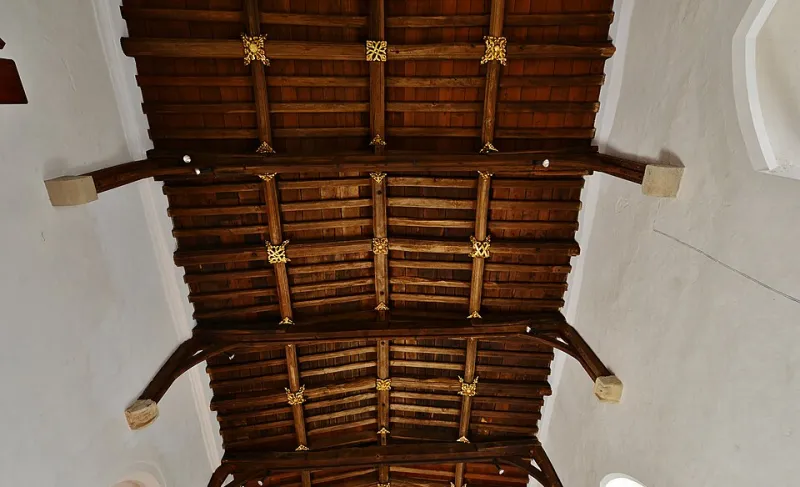
Photo: Michael Garlick , CC BY-SA 2.0, via Wikimedia Commons
Period homes in the UK present a particular discipline for lighting specification. A steel pendant that looks restrained in a showroom can become a considerable point load once the shade, lamp, canopy and flex are counted. In a ceiling of lath and plaster, the visible rose is rarely the part that should carry that load. The specification task is therefore architectural before it is decorative: establish a load path into the structure, then preserve the ceiling detail around it.
Begin with the load path, not the rose
The first calculation is the dead load of the complete assembly. Steel shades vary widely in mass, and a large spun-metal pendant may weigh several times more than a pressed-steel domestic fitting. Add the lamp, canopy, ceiling plate, flex and any diffuser. Check the manufacturer’s stated weight and fixing limitations rather than estimating from appearance. The ceiling rose, whether original or reproduction, should be treated as a decorative element unless its fixing capacity is known and suitable.
Lath and plaster has limited pull-out strength and is brittle under point loading. A fixing that feels firm in the plaster skim may still transfer vibration and movement to the laths. For steel pendants, the safe default is independent support to a joist, noggin or purpose-made ceiling plate that is itself fixed to structure. Where the ceiling void is inaccessible, use a joist finder and confirm the fixing by inspection or a small controlled opening. Cavity fixings alone are not an appropriate primary support for a heavy pendant.
Where the pendant exceeds the rating of an existing rose, introduce a structural ceiling plate or pattress above the plaster line and connect the canopy or rose to that plate. The plate should be sized to spread the load and finished to suit the room. In older buildings, the ceiling may have been over-boarded or repaired; the visible surface is not evidence of the structure above.
Canopies, adapters and the existing rose
Canopy size is a common specification error. A steel canopy may be smaller than the footprint of an original plaster rose, leaving a ring of damaged decoration exposed. Adapter plates and reducer rings can bridge the gap, but they must not become a way of clamping brittle plaster between metal surfaces. The canopy should sit cleanly against a stable ceiling surface, with any original rose protected or carefully accommodated.
Where a period rose is to be retained, choose a pendant with a compact canopy and a central fixing arrangement. Some roses can be split or adapted by a conservator, but this is a conservation decision rather than a standard electrical one. A threaded nipple or hook arrangement can allow the flex to pass through the centre while the load is carried by a separate structural fixing. The cable entry should be smooth and free from sharp edges, particularly where a braided flex is used.
Earthing requires attention with steel fittings. Powder-coated canopies may insulate the fixing points, so an earth tag or dedicated earthing terminal should be used where the manufacturer provides one. The earth continuity of the complete assembly should be confirmed at commissioning. Do not rely on a metal canopy making contact with a painted ceiling plate.
Safe fixing through lath and plaster
The practical sequence is familiar but often rushed. Locate the joists, mark centres, and drill pilot holes through the plaster and lath into timber. Use screws of a length and gauge suited to the structural fixing, not the plaster thickness. Avoid fixing into lath alone, and avoid over-tightening, which can crack the plaster around the canopy. Where the joist is not in the right position for the pendant, a noggin fitted above the ceiling is preferable to an eccentric fixing.
Access from the floor above is often the least invasive route in period homes. Lifting a small section of floorboard may allow a noggin, ceiling plate or new cable route to be installed without disturbing the visible ceiling. In flats and listed buildings, this requires careful sequencing and, where relevant, consent. The electrical installation should comply with BS 7671, and the work should be carried out by a competent registered electrician.
Keeping period detail without surface conduit
Surface-mounted conduit is sometimes proposed as the simple answer to a new pendant position. In a period room, it is rarely the best one. Existing ceiling voids, floor above, cornice routes and original lighting points can often be reused. Where a new point is unavoidable, plaster-in conduit or a concealed route to a ceiling rose can preserve the appearance of the ceiling. The aim is not to hide every cable at any cost, but to avoid letting a modern containment system dominate a decorative ceiling.
In listed or conservation-area properties, the visual impact of new fixing plates and cable routes should be considered alongside the electrical design. A slim steel plate finished to match the canopy may be less intrusive than a plastic pattress, but it still requires a structural fixing. The detail should be agreed before work starts, not resolved on site.
Commissioning and handover
At completion, confirm earth continuity, polarity and termination security. Check that the canopy has not compressed the flex and that the pendant hangs plumb. Record the fixing method and the rated capacity of any ceiling plate for future maintenance. A steel pendant in a period ceiling can be both safe and sympathetic, but only when the load is carried by the structure and the plaster detail is treated as part of the design.