The Warm-Wet Room: A Specification Sequence for Steel-Framed Pools
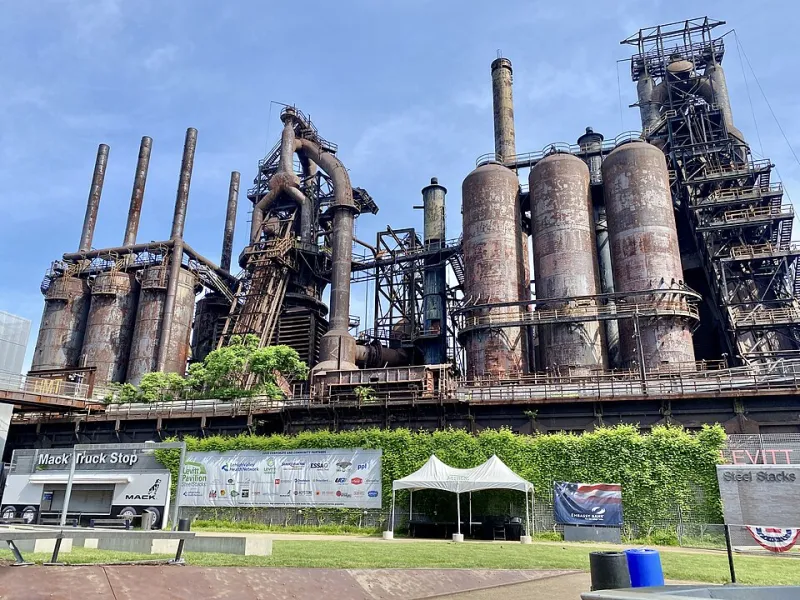
Photo: Basile Morin, CC BY-SA 4.0, via Wikimedia Commons
Indoor pool halls are not simply wet rooms at a larger scale. They are warm, humid, chlorine-bearing environments in which exposed steel may be both the primary structure and the principal visual feature. Lighting has to be selected for that atmosphere, not merely for the possibility of a splash. In UK garden pool enclosures, hotel leisure suites and private wellness rooms, premature failure usually begins with a detail that looked adequate on a dry-day site visit.
Begin with the atmosphere, not the fitting
A pool hall holds a stable warm temperature, a high relative humidity and airborne chloramines from disinfectant reaction. The steel frame may sit close to the dew point in winter, particularly where a cold bridge meets warm moist air. The lighting specification should therefore start with a simple question: where will the luminaire sit in the room's air path, and what will condense on it?
This is different from specifying for direct water exposure. A fitting above a pool may never be sprayed, yet it can fail through vapour movement, condensation inside a warm enclosure and corrosion at fixings. The first decision is environmental, not aesthetic.
IP ratings are a floor, not a finish
The wiring regulations treat pool locations through defined zones, and those zones remain the starting point for UK projects. Above the pool, outside the immediate splash zones, it is still common to see ordinary IP44 decorative fittings specified because the ceiling is considered remote from the water. That is rarely a sound approach in a warm, humid pool hall. An IP65 rating is a reasonable minimum for many positions, with IP66 or higher where washdown or directed jets are expected.
But the ingress protection code does not measure resistance to chloride-bearing air. A fitting can keep water out and still corrode at its screws, hinges or cable entry. Nor does a high IP rating guarantee that an enclosure breathes correctly. Gaskets, pressure-equalisation vents and cable glands all affect whether vapour is trapped inside the body. The specification should treat IP as one line in a schedule, not the whole schedule.
Separate the corrosion question
Exposed steel frames and pool lighting share a corrosion problem, but they do not share the same solution. For luminaire housings and brackets, the finish system matters more than the colour. Polyester powder coating over a properly pretreated substrate, marine-grade stainless steel where the budget allows, and isolated fixings between dissimilar metals are all part of the same logic. A4 stainless fixings are a sensible default in this environment; ordinary bright zinc-plated screws are not.
The steel frame itself may be galvanised, powder-coated or left deliberately exposed. Where a luminaire is fixed to that frame, the junction becomes a potential corrosion cell. Isolation washers, plastic standoffs and drainage paths help. Profiles should shed water rather than collect it, and gaskets should be selected for chlorine exposure rather than general interior use. The question is not simply whether the finish looks appropriate on handover, but whether it will still look appropriate after several heating seasons.
Detail the thermal bridge
A luminaire fixed tight to a steel beam can be structurally elegant and thermally unfortunate. The steel may be colder than the surrounding air, and the luminaire body may become the coldest surface in its immediate vicinity. Condensation then forms exactly where the cable gland and driver connection are least able to tolerate it.
A short standoff bracket with a thermal break is often more valuable than a higher IP rating alone. It allows air to move behind the fitting, reduces direct conduction from the steel and makes the cable entry easier to protect. The same principle applies to linear runs fixed along exposed beams: continuous contact along a cold steel face is rarely the best detail in a pool hall.
Put the driver outside the room
LED drivers are often the first component to suffer. Remote driver placement in a dry, ventilated plant room or service corridor is preferable to housing gear in the pool hall ceiling void. The void may appear protected, but it can be humid, warm and difficult to access.
Remote gear should be accessible without scaffolding or specialist access equipment. Junction boxes should be rated for the location, cable glands should suit the cable and enclosure, and cable routes should include a drainage loop where condensation is possible. Driver ambient temperature ratings need to be read against the actual plant-room temperature, not the comfortable showroom figure. In a pool building, maintenance access is part of the lighting design.
Control glare across the water
Water is a horizontal mirror. A bright fitting that looks controlled on a dry ceiling can double in the pool surface and become the dominant source in the room. The aim is not to eliminate every reflection, but to keep luminaires out of the principal sightlines from seated bathers and from the approach to the pool.
Low-glare optics, asymmetric distribution and careful positioning relative to eye height do more than decorative diffusers. Where the steel frame is being washed with light, the effect should be tested against the water surface, not only against the structure. A neutral white with good colour rendering will flatter skin tones and the surrounding materials; an excessively warm or heavily saturated source can make a chlorinated interior feel closer to a leisure centre than a private pool.
Emergency lighting in a wet room
Emergency lighting in a pool hall has to survive the same atmosphere as the general lighting, and it has to remain legible around water. Self-contained emergency luminaires need to be selected for the ambient temperature and humidity, not simply for their rated duration. Battery performance and test regimes should be considered at the specification stage, and the escape route should not depend on the pool lighting circuit remaining energised.
The emergency layout should be coordinated with the normal lighting layout, the ventilation grilles and the drainage details. A fitting that is difficult to access for monthly testing will be difficult to maintain over the life of the building.
Coordinate with ventilation and drainage
Lighting is often the last service to be fixed in a pool hall and the first to reveal poor coordination. Extract grilles, supply diffusers, condensation gutters and drainage outlets all affect where a luminaire can sit without becoming a collection point for moist air. A fitting placed in a dead zone may attract condensation even when the general ventilation strategy is sound.
The layout should be developed alongside the ventilation and drainage drawings, not after them. Cable routes should avoid drainage runs and maintenance access should be agreed early. On exposed steel frames, the fixing positions also need to respect the structural design and the fire protection strategy.
A short specification sequence
For a UK pool hall, the working order is: define the zones and the atmosphere; separate ingress protection from corrosion resistance; detail thermal breaks at steel interfaces; place drivers and junctions outside the humid volume; control glare against the water surface; specify emergency lighting for the same environment; and coordinate with ventilation, drainage and maintenance access. That sequence will not make a pool hall dry, but it will make the lighting more likely to survive the warm-wet room it was designed for.